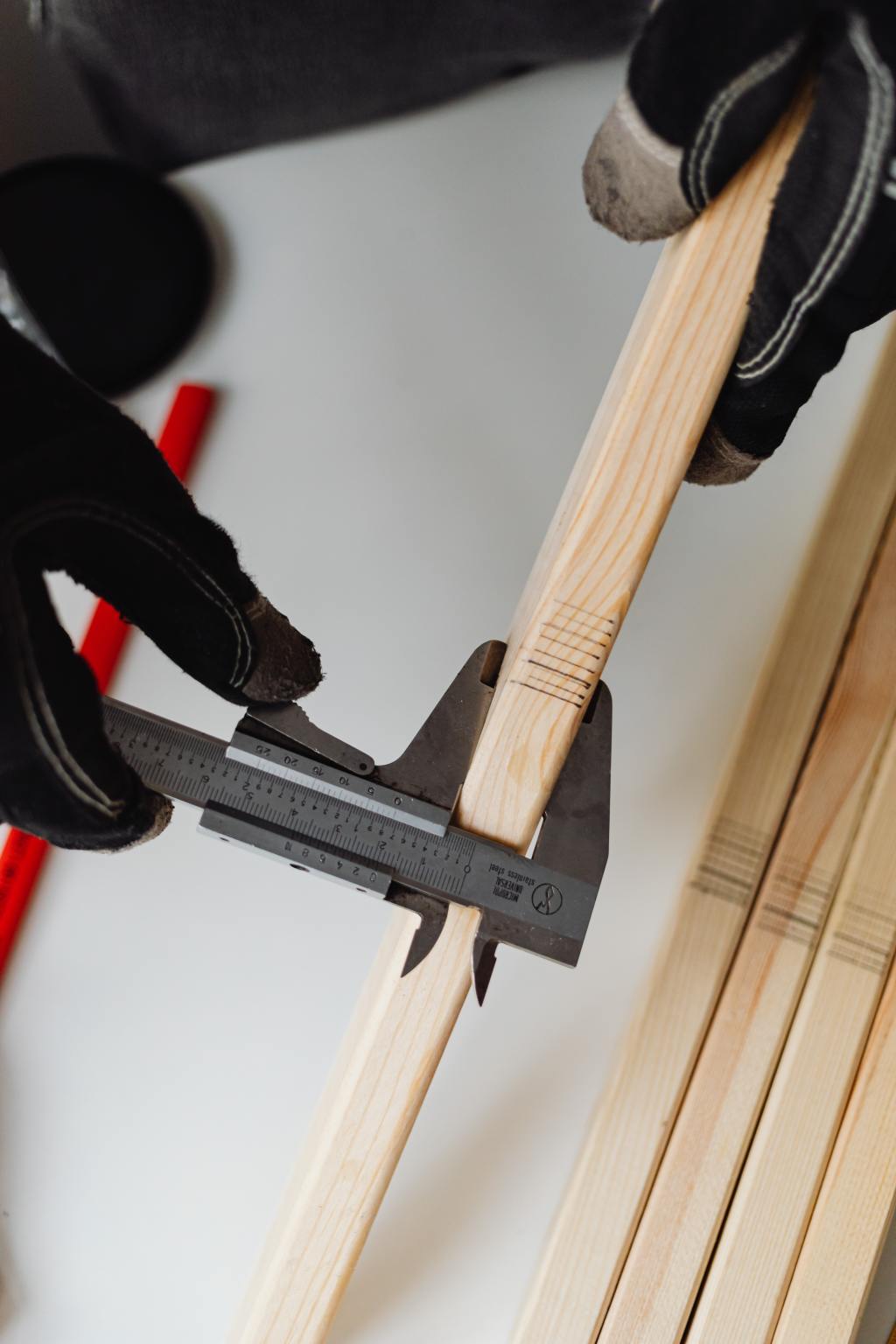
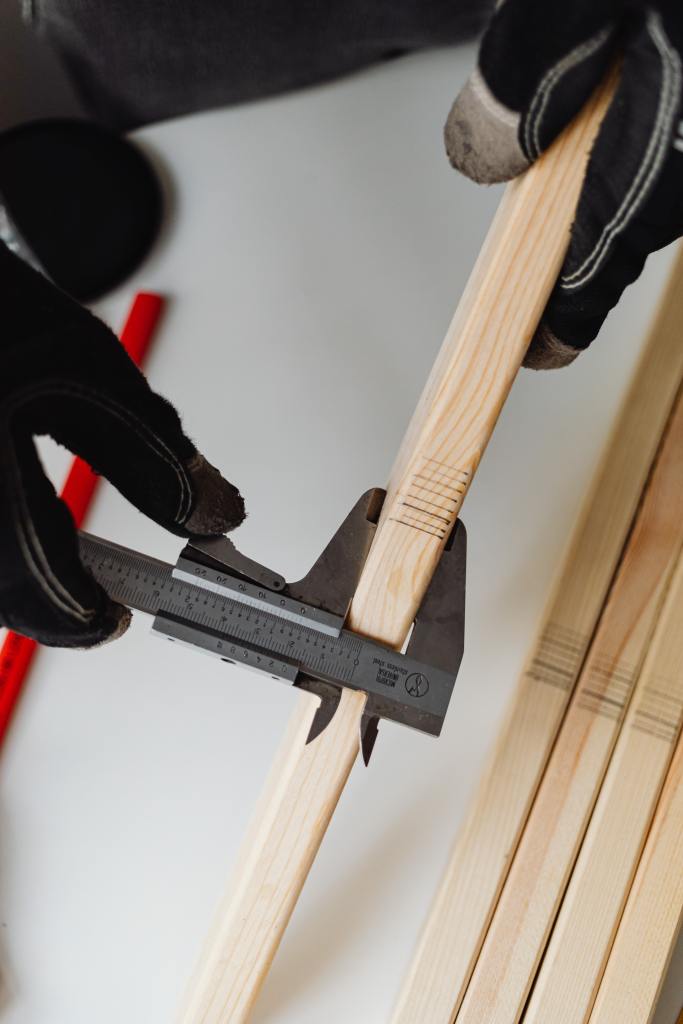
Recently, I helped my girlfriend create a woodworking model for something I call a “horse jumpy thing.”
It’s a rack for holding a plank that horses jump over for competitions.
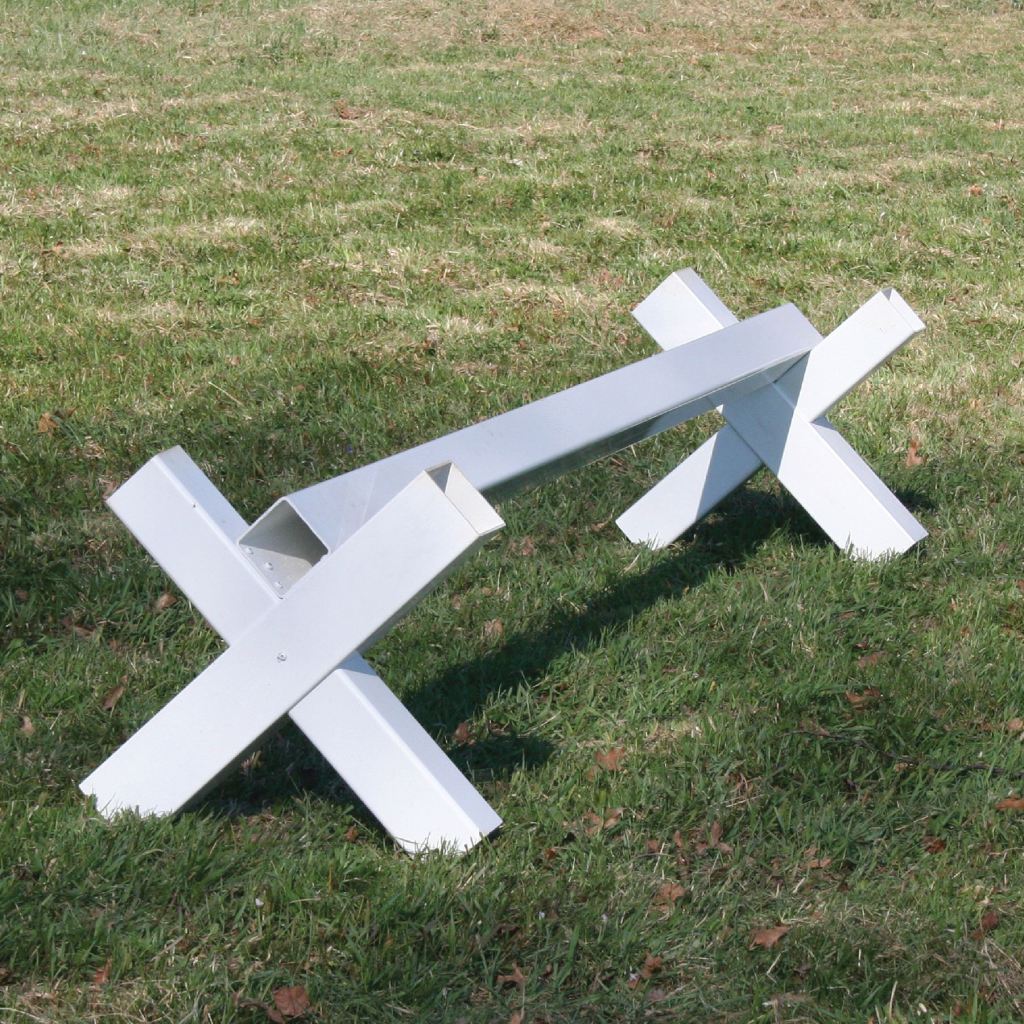
But, more importantly, the competition guidelines state that the top of the plank must be 18 inches off the ground. This is what I call the “critical dimension.” Here’s what I mean:
Every object has a purpose that guides the dimensions. However, not every dimension in an object is equally important.
In most cases, there are a few dimensions — or maybe just one dimension — that cannot change, because it would compromise the function of the component. These are critical dimensions, because they’re fixed. And the other dimensions are based on maintaining the critical dimensions.
Sometimes this critical dimension is assigned, as is the case with my girlfriend’s horse jumpy thing. In other applications, the critical dimensions are determined by the component’s function or the dimensions of other connected components.
However, if you identify the critical dimension first, it simplifies the entire design process.
Why finding the critical dimension makes your life easier
At the start, my girlfriend was doing all sorts of math to determine all the dimensions for the rack that held the horizontal plank (typical engineer!).
While it’s possible to work out all the dimensions mathematically, it’s not always the most efficient way to create a design. It’s not even always necessary to do all this math, since all the supporting dimensions can change to support the critical dimension.
In case of this horse jumpy thing, the critical dimension is 18 inches, since that cannot change. All the other dimensions must be adjusted to ensure the top of the plank is exactly 18 inches, regardless of how you design the rack that holds the plank.
So, rather than using math to identify the dimensions of the rack, all I needed to know was the height of the plank (18 inches) and the size of the lumber that my girlfriend intended to use to build the rack (4×4 planks).
With that information, I created a drawing that set the height of the plank and the size of the lumber. Then all I had to do was use constraints in my modeling software to set the supporting dimensions in relation to the critical dimension of 18 inches.
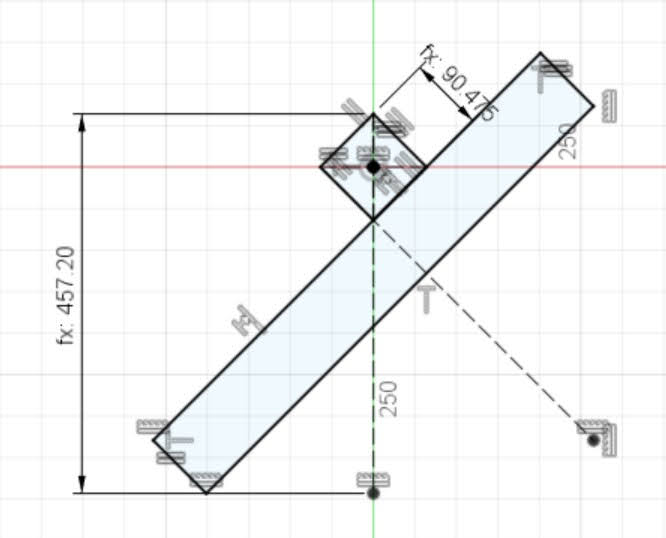
Rather than using mathematical formulas to work out the length of triangles and what not, I just measured the lines I had drawn to get the dimensions of the rack.
As a bonus, this produced a much simpler sketch, and a model that could easily be updated by changing a couple dimensions.
Does this always work?
In short, yes.
The caveat is that it may not be quite as simple to work out the critical dimension as it was in this woodworking project. In other applications, you may have to do a lot of math to figure out the critical dimensions.
As I mentioned earlier, often the critical dimensions are determined by other components and the component function. Additionally, certain components may have multiple critical dimensions.
These critical dimensions may be a combination of assigned dimensions and dimensions which are determined by the dimensions of other components. Some components may have more critical dimensions than supporting dimensions.
However, it’s important to take stock of these critical dimensions first. Otherwise you may end up doing a lot of work to calculate dimensions that would have been determined simply by setting a few critical dimensions.
Most professional engineers and designers are probably familiar with assigned dimensions. Projects usually start with target parameters or functions. And this might seem like obvious advice, because it is a bit obvious.
But my girlfriend is a lead engineer for a large, successful engineering firm. And there she was, defaulting to running calculations to find dimensions, rather than letting the project reveal the dimensions without so much work.
This might make less work for you…
I have no doubt that many experienced engineers and designers are thinking “Yeah, no kidding.”
The trouble arises when people don’t identify critical dimensions with intention. Often, this part of the design process ends up being a sort of byproduct of other steps.
That can cause redundant work, simply because the engineer or designer didn’t realize that certain things had already been done. And the additional work typically doesn’t get spotted when people work to streamline their design process, because the redundant work produced the correct dimensions.
For fledgling designers, like myself, this realization that not all dimensions need to be calculated was valuable because it helped clarify how to create new things.
For experienced engineers and designers, I think this is valuable to think about, because a thorough process kind of makes identifying critical dimensions a subconscious act. Intentionally identifying critical dimensions could prevent redundancy later on, simply because you’ll be more cognizant of what needs to be calculated and what can be determined by other calculations and measured.
Maybe it’s not a huge breakthrough for everyone. But this realization definitely simplified my design process and helps me produce simpler sketches and designs that are easier to read.
 Classical Manufacturing