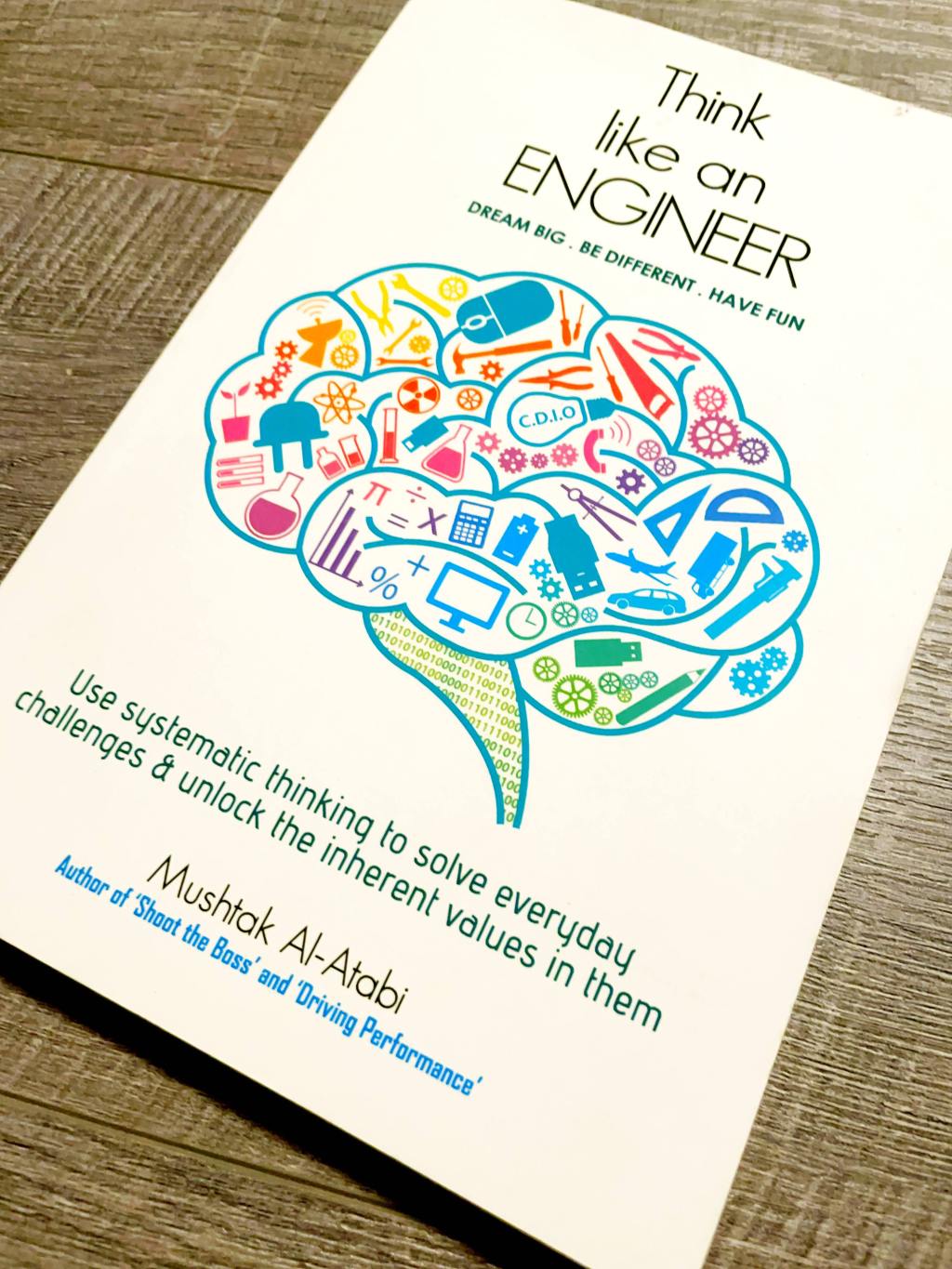
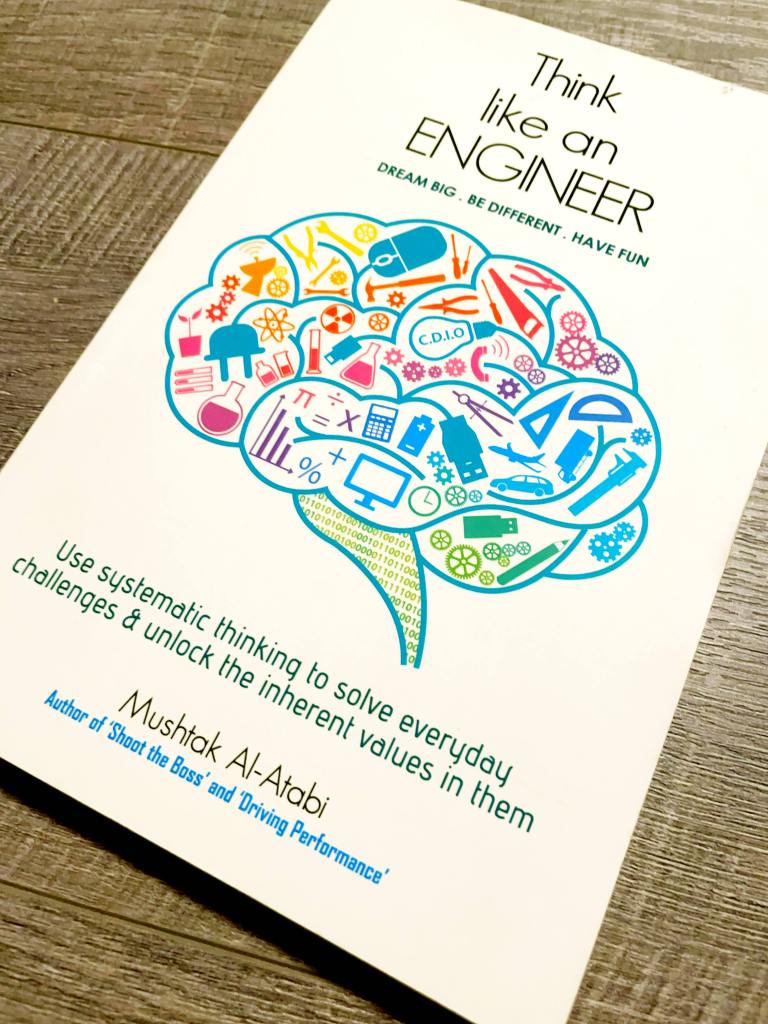
Think Like an Engineer, by Mushtak Al-Atabi, is one of the first books I read when I started learning about engineering and design.
I’m willing to bet that experienced engineers and designers would find this book to be a clear articulation of things that they do all the time. However, it’s a good read for those with less experience using engineering principles to solve problems (like me).
There’s a lot in this book. But, for me, there was one overarching takeaway.
What is CDIO?
The tagline of How to Think Like an Engineer is about using systematic thinking to solve all sorts of problem. Most of the meat of the book is dedicated to describing how to think systematically.
I think the system that Al-Atabi lays out is cool because it really can be applied to building anything. I’ve used it to build out a process for creating everything from my bullet journal to blog posts and, yes, physical object designs.
And the process is quite intuitive. These are the big steps.
Conceive
The book lays out that engineering is adding value to the world by solving problems by creating solutions that don’t yet exist.
This definition of engineering makes sense to me, because one wouldn’t need to engineer a solution if the solution already existed. Obviously, engineers use plenty of pre-engineered objects in creating new solutions, because everything is a remix.
But, engineers and designers put those prebuilt solutions together in ways that have never been done before, thus creating a new solution from existing solutions.
And that process starts by conceiving of some object or process that accomplishes a certain goal.
The thing that I believe makes the CDIO process intuitive is that most people conceive of new things all the time. We’ve all heard people describe some idea for solving a problem they have.
However, most people aren’t versed in the skills they need to actually create the thing they’ve imagined, because most people are not engineers.
But simply imagining a new solution is the first step in the process. And anyone can do that.
Design
The design step is where most people run into a skills gap, when it comes to creating real solutions.
That’s not always the case. For instance, I have all the skills I need to design a blog post or a bullet journal. But far fewer people have all the skills they need to design a physical object.
Even professional engineers sometimes don’t have all the skills they need to design something from start to finish. That’s why organizations usually build teams that consist of mechanical engineers, electrical engineers, manufacturing engineers, systems engineers, and so on.
But this is the stage where you’d start working in your CAD software or use other design tools.
If you’re a writer like me, creating an outline is the design process. For an artist, the design step might be creating a pencil sketch.
In any case, designing is starting to bring the idea from your mind into the real world.
Implement
Implement is part production and part problem solving. No matter what, when you start actually producing the solution, there are going to be kinks to work out and unforeseen challenges to overcome.
Maybe the initial materials selection needs to be adjusted. Or maybe the sections from the outline need to be rearranged or new sections added. An artist may need to make decisions about where to deviate from the pencil sketch.
The end of the implementation step ends with some early iteration of the finished product.
In most engineering environments, the implementation process is intense, because many engineering disciplines require that there are few issues when the solution is put into operation. In some fields of engineering, the margin for error is nearly zero.
So implementation may involve a lot of testing and troubleshooting to get things absolutely correct.
Operate
Operate is the stage where the solution is actually put to use.
This may involve more iteration to address even more unforeseen challenges. But, in theory, if the design and implementation process was thorough, the solution should work in practice.
These four stages are the strategic steps in the systematic process of engineering. But the system itself wasn’t my big takeaway, even if I do find it useful.
How to actually think like an engineer
It’s not the first time I’ve heard this. But, for some reason it stuck with me more when I read it in How to Think Like an Engineer than when I’ve seen this idea in other places.
The idea is to have a consistent system for solving problems. Yes, just one system to solve any problem.
If you attempt to create a unique process for solving every problem, you essentially end up doing twice as much work. You must create a tailor-made system to solve the problem, then use that system to create a solution.
But, if you have a single system that can be applied to any problem, you’ve basically done half the work ahead of time.
As I said before, I’ve heard this idea of creating habits and systems before. But I was getting it wrong.
My original perception of the idea of systematic thinking was not systematic thinking at all. It was the idea of tailor-made systems I just described.
One system for creating blog posts. Another system for object design. And still another system for getting out of bed and working out in the morning.
But How to Think Like an Engineer advocates for using a single system to address any problem.
Sure, the underlying tactics will vary based on the problem you’re solving. But the same system — CDIO — can be applied to literally anything.
And it saves a ton of time and energy, because you never really have to think about how to solve a problem. You just follow the steps. It’s executing the steps that becomes the challenge.
That’s an efficient way to do anything. And it’s such a simple concept that I feel a little silly for misunderstanding the idea of systematic thinking in the first place.
A system solves problems
There’s a whole lot more in this book. It’s a great read for anyone.
Using one system to deal with any problem might seem far fetched. But give it a try. You might be surprised by how efficient it is to pair your systems down to one.
 Classical Manufacturing